










Health and fitness have a surprising scale: in 2022, 31% of adults worldwide, or 1.8 billion people, missed recommended activity levels. A few manageable changes to our movement habits can make a fitness routine feel possible, even when we are starting from scratch.
We do not need a perfect day or expensive equipment to begin. Moderate-intensity activity means movement that noticeably raises breathing and heart rate while still allowing conversation. A walk at a brisk but comfortable pace can fit that description.
We can build a routine around movement, strength, recovery, and consistency. Starting with a small step can make it easier to return tomorrow. Progress may take time, and our needs can change as life changes.
We can make room for exercise around work, family, and the ordinary demands of the day. The aim is a plan that feels useful, not a test of willpower. A routine we can return to is more useful than an ambitious plan we cannot sustain.
Key Takeaways
- Start with a manageable activity and build gradually.
- Combine movement with strength, balance, and recovery.
- Choose a pace that lets us keep talking.
- Use a schedule that fits our life.
- Measure progress by what we can repeat.
What Does Health and Fitness Include?
Health describes our broader well-being, while fitness is our ability to meet physical demands such as walking, lifting, and balancing. Both matter, but they describe different parts of how we feel and function.
A balanced routine uses different types of activity for different needs. The Physical Activity Guidelines for Americans include aerobic activity, muscle-strengthening activity, and balance activity.
Each kind of movement has a different job, so a balanced routine makes room for more than one.
How Health Differs From Fitness
The health and fitness difference is that health includes broader physical and mental well-being, while fitness describes abilities such as endurance, strength, mobility, and balance.
Health and fitness articles can introduce movement ideas, and a health and fitness magazine can offer inspiration. We can compare advice with public guidance from the National Institute on Aging or the World Health Organization, especially when a website makes bold promotional claims.
Which Activities Belong in a Balanced Routine?
The American Heart Association describes aerobic activity as movement that raises heart rate and breathing. Strength training uses resistance, such as weights, bands, or body weight. Flexibility is the ability of muscles and connective tissue to stretch; mobility is a joint’s ability to move through its range.
| Activity type | Examples | Main focus | Practical note |
|---|---|---|---|
| Aerobic activity | Brisk walking or cycling | Heart and lungs | Choose a pace that raises breathing |
| Strength training | Weights or bands | Muscles and bones | Work major muscle groups |
| Flexibility and mobility | Stretching or joint movement | Range of motion | No fixed weekly minute target |
| Balance | Tai chi or yoga | Stability | Use support if needed |
We can fit stretches into warmups or quiet moments without treating them as a separate weekly quota. Stretching supports movement, but the guidelines do not set a specific weekly minute target for it.
How Much Exercise Should Older Adults Aim for Each Week?
Older adults should gradually work toward at least 150 minutes of moderate aerobic activity each week. Gradually means we can start below that level and add time as our strength and stamina grow.

Older adults can meet the aerobic activity goal with 75 minutes of vigorous activity or a mix of moderate and vigorous activity. Some people call this aerobic exercise, but we use aerobic activity here.
Aerobic Minutes and Intensity
Moderate activity noticeably raises breathing and heart rate while still allowing conversation. Vigorous activity takes more effort. We can split movement into shorter bouts when a long session does not suit our day.
The World Health Organization reported that 31% of adults worldwide, or 1.8 billion people, did not meet its recommended activity level in 2022. Its physical activity factsheet also says insufficiently active people have a 20%-30% higher risk of death than sufficiently active people. Regular movement may help lower risk, but it cannot remove every health risk.
Strength and Balance Sessions
Strength training should work major muscle groups at least two days per week. Isometric exercises hold a position, as in planks or held leg lifts; isotonic exercises move through a range, as in curls or presses.
One set of 8 to 12 repetitions can be effective, while two or three sets may work better. Strength training can help maintain muscle and bone and reduce fall risk. Leave a day between sessions that train the same muscle group.
About three balance sessions per week are recommended for older adults. A health and fitness topic for a class can focus on a weekly activity plan. A health and fitness essay can explain one goal, its evidence, and a realistic routine.
- Build toward the aerobic activity goal.
- Do strength training on at least two days.
- Include about three balance sessions.
What Is the 3-3-3 Rule for Fitness?
The 3-3-3 rule is a simple strength-workout template: train 3 times a week, choose 3 compound movements, and do 3 sets of each. Compound movements recruit several muscle groups at once.
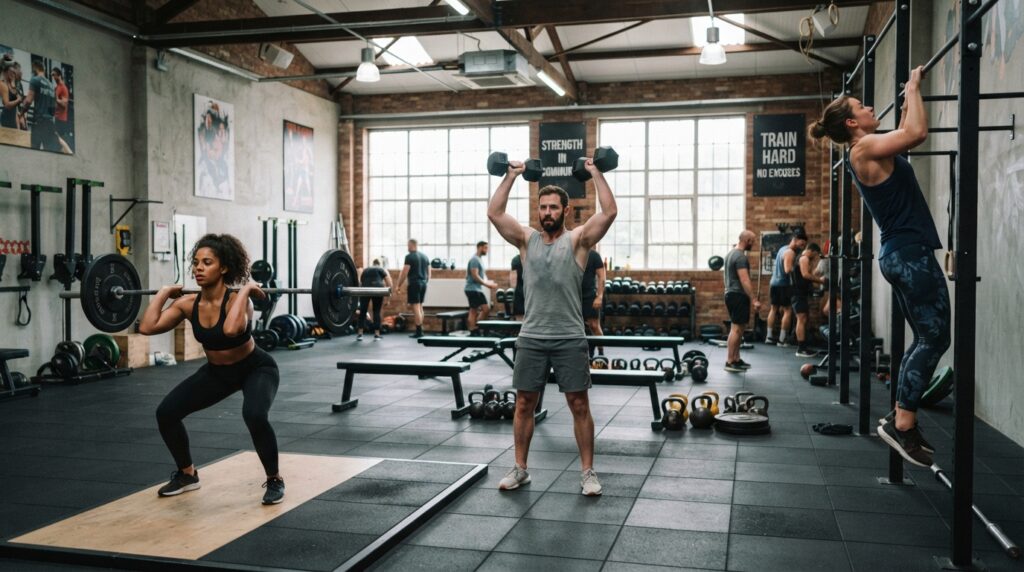
A sample workout pairs a squat, a press, and a pull. We might do body-weight squats, a dumbbell press, and a band row. Those three moves give us a clear structure without needing a long list of exercises.
Each workout follows the same basic pattern. We choose one movement that bends the hips and knees, one that pushes, and one that pulls. The plan can work at home or in a gym, with equipment adjusted to our needs.
We can use the beginner’s guide to activity planning to think through how this template fits a broader routine. The rule is a strength-training template, not a complete health plan. It does not cover aerobic activity, balance, or recovery.
A common beginner’s mistake is treating three sets as a reason to lift heavy or push every set to failure. We can start with manageable resistance and focus on steady, controlled movement. Keep the load light enough to complete each movement with controlled form.
How Can Exercise Support Weight and Heart Health?
Aerobic activity and strength training support different parts of heart and weight health, so combining them gives us broader coverage than relying on either alone. Each has a role: aerobic activity challenges the heart and lungs, while strength training builds or maintains muscle mass.
Movement can support blood sugar management and lower risk factors linked to heart disease and type 2 diabetes. Nutrition and other health factors also matter, so exercise alone cannot promise a specific change in weight or health.
| Approach | Examples | Main contribution | Useful for |
|---|---|---|---|
| Aerobic activity | Brisk walking or cycling | Cardiovascular fitness and energy use | Building endurance |
| Strength training | Bands or weights | Muscle and bone support | Building strength |
| A combination | Walking plus strength sessions | Broader fitness coverage | A balanced routine |
Obesity affects 42.4% of U.S. adults, and about 49% of adults with obesity report actively trying to manage their weight. Those weight-management figures show how common the effort can be, not what any one person should expect.
For people who choose weight loss, a gradual pace of 1 to 2 pounds per week is linked with better odds of keeping weight off long term. That pace is not a promise or a required target. Daily activity can also support energy use and help us build strength, even when the scale stays steady.
We can notice other signs of progress, such as easier walks, more steady balance, or carrying groceries with less effort. Treat weight change as one possible outcome, not the only measure of progress.
How Can We Make Exercise Safer and Easier to Stick With?
A routine is safer to sustain when its first sessions match our current ability instead of an idealized version of fitness. A little activity can be a useful start, especially when we have been inactive.
Starting with 5 minutes a day and building toward 10 or 15 minutes is one option for beginners. A clinician can advise us if we have a major health condition, pain, mobility limits, or concerns about starting.
Adapt Movement to Our Ability
We can use a chair or counter for supported balance practice. Easier versions of strength movements, such as seated presses or sit-to-stands from a higher chair, can help us find a steady level.
A little soreness may happen after new activity. Persistent poor recovery is a sign to reduce intensity or frequency. A simple everyday wellness routine can also make room for movement alongside sleep and stress care.
Build a Schedule We Can Repeat
The best time of day is the time we can follow consistently. We should finish vigorous exercise at least 2 to 3 hours before bedtime to help the body wind down. Recovery can include low-intensity walking or gentle yoga.
- Choose a manageable activity we can begin now.
- Schedule a realistic time that fits our day.
- Record each session in a simple log.
- Adjust the plan when life disrupts it.
A missed session does not erase earlier effort, and we can restart with the next open slot. If a workout repeatedly leaves us unable to recover before the next session, reduce its intensity or frequency.
Which Fitness Options Work Well for Older Adults?
Older adults can build a useful routine from adaptable activities such as walking, seated strength work, and supported balance practice. Adaptable options can fit different settings, from a neighborhood path to a living room chair.
Walking, swimming, tai chi, yoga, and seated strength exercises offer different ways to move. Chair exercises can include curls, overhead presses, calf raises, sit-to-stands, and knee extensions. We can also use a sturdy support for balance practice.
Low-Impact and Supported Movement
Walking is easy to adjust by changing pace or route. Swimming offers movement in water, while yoga and tai chi can include balance practice. Seated strength work can help us train muscles without standing for every exercise.
We can ask a class leader what movements a class includes and whether changes are welcome. A health and fitness gym may offer equipment or classes. A health and fitness program may also use community classes or workout videos.
Classes, Gyms, and Wearable Tools
Some Medicare Advantage, or Part C, plans may offer SilverSneakers, a fitness program for people over 65. It provides access to gyms, community exercise classes, and workout videos, but plan benefits differ.
The 2026 fitness-trends forecast ranked wearable technology first, followed by programs for older adults, exercise for weight management, mobile exercise apps, and balance, flow, and core strength. The forecast drew on a survey of 2,000 clinicians, researchers, and exercise professionals.
Trend rankings describe what professionals expect to gain attention, not proof that one activity works better than another.
Nearly half of U.S. adults own a fitness tracker or smartwatch. The baby boomer generation includes 73 million Americans, all of whom will be over age 65 by 2030. A tracker can record steps or sessions, but we can also use a paper log.
Check the specific Medicare Advantage plan documents to confirm whether SilverSneakers access is included.
Conclusion
We do not need a perfect plan to begin building a more active life. Regular exercise can support energy, mood, a healthy weight, and lower risk for some health problems, though it cannot remove every risk.
Consistency matters more than starting with an ideal routine. A few minutes of movement or one simple strength session can be a personal first step. We can adjust as our needs and schedule change, without treating a missed day as failure.
Choose one activity that feels manageable and put its first session on the calendar.