









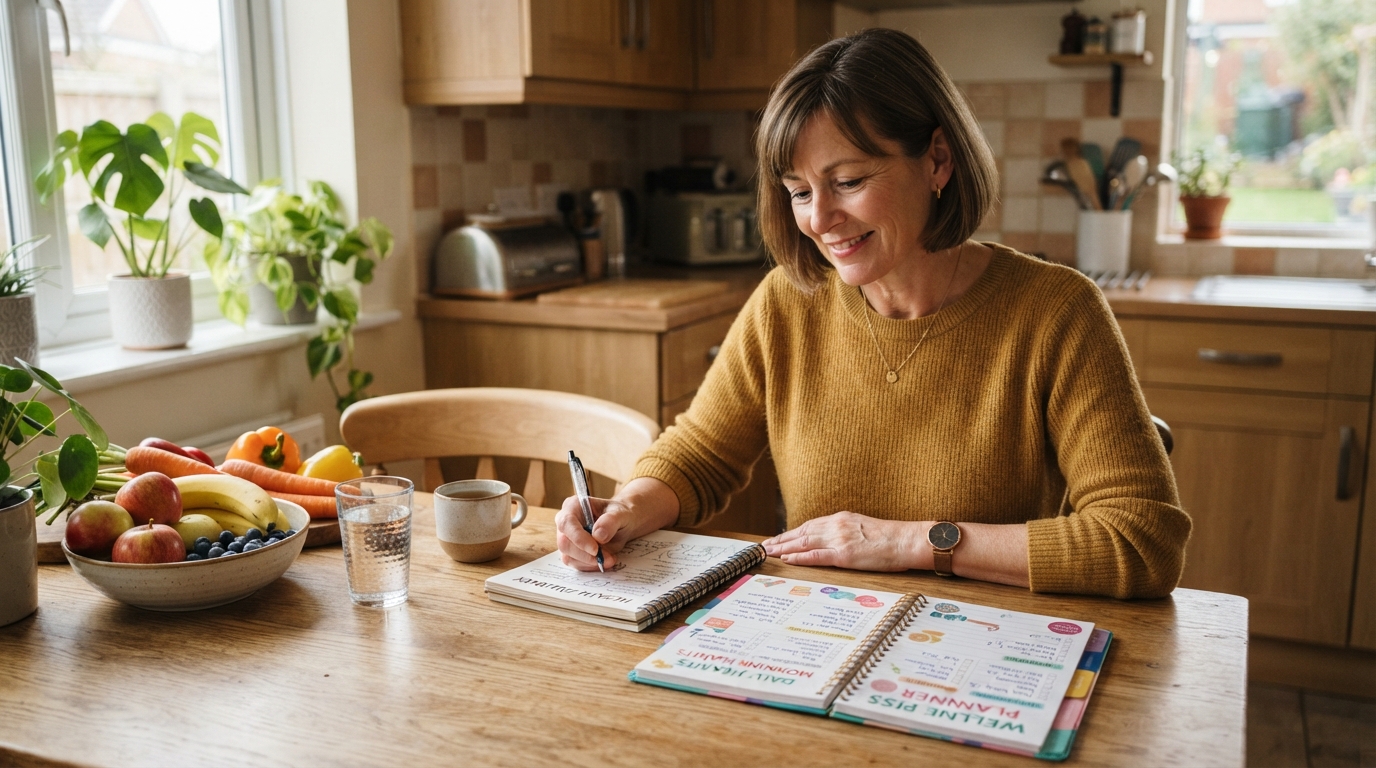
Daily habits for health can take 18 to 254 days to form, far longer than the popular 21-day claim. A routine that works is one we can return to, even on a busy day.
Work, school, family needs, and changing energy can make a perfect schedule feel out of reach. We do not need to overhaul our lives to support physical and mental health. A few steady choices can fit into the time we have and support our well-being over time.
We can focus on movement, food, sleep, stress care, and connection without trying to change everything at once. A sustainable routine leaves room for busy days and lets us adjust when our goals or needs change. We can start with one small change and let consistency matter more than perfection.
Key Takeaways
- Start with a change small enough to repeat.
- Use a cue that already happens in our day.
- Adjust routines when they feel too hard to keep.
- Make room for movement, sleep, food, and connection.
- Seek support when health changes affect daily life.
How to Build Daily Habits for Health That Stick
A habit is more likely to stick when we make it small enough to repeat and connect it to a cue we already have. Habit stacking means linking a new action to an action we already do, so the existing action becomes a cue.
Habit formation can take a few weeks to a year, depending on the action and the person. A 2009 study found a range of 18-254 days, with an average of about 66 days. The belief that every new behavior becomes routine in exactly 21 days is a myth. The habit formation research also describes how much the timeline can vary.
We can build a useful routine by testing one action at a time. These five steps keep the process practical:
- Choose one useful action that supports our overall health.
- Make the action small enough to do on an ordinary day.
- Attach it to a reliable cue we already notice.
- Notice whether the action fits our time and daily life.
- Adjust the action rather than abandoning the goal.
A habit that repeatedly feels burdensome may need to be made smaller, not forced at full size.
Ten healthy habits to follow every day can span nourishing food, hydration, movement, sleep, stress care, connection, oral care, sun protection, preventive care, and a workable routine. We do not need to start all ten together. One repeated action can bring health benefits while leaving room to add another later.
Some habits take longer to feel natural than others. A short walk after lunch may fit right away, while a new bedtime routine may take more adjustment. Keep the first change small enough that it still feels doable on a rushed day.
Which Morning Habits Make It Easier to Start Well?
A useful morning routine can fit into the first few minutes we already have. Morning light, gentle movement, water, breakfast, and a quick plan are five flexible choices that can help us start the day.
A short, repeatable sequence works better than a long routine we cannot keep. We can choose one action, then add another only when the first feels easy. Students can prepare school items the night before, while women can adapt the same options to their own schedules.
Get daylight and loosen up
Getting morning sunlight within 30 minutes of waking is one option. We can step outside or sit near natural light, even if we only have a few minutes. A bright window offers a simple indoor choice when going outdoors does not fit.
Gentle movement can help us feel ready to begin. A 5-10-minute stretch is enough for a simple start, and we can do it beside the bed or while still lying down. There is no need to turn a quiet stretch into a workout.
Choose one simple morning anchor
A cue can make a new action easier to remember. We might drink a glass of water after brushing our teeth, then take a brief look at the day’s priorities. A familiar step gives the next one a place to fit.
Breakfast can be part of the sequence if it suits us. Some mornings call for a meal, while others need a simple item we can take along. The goal is a choice we can repeat, not a demanding plan that uses up our morning time.
| Moment | Habit | Simple version |
|---|---|---|
| Within 30 minutes of waking | Get morning light | Step outside or sit by a bright window |
| After brushing teeth | Drink water | Keep a glass nearby |
| Before leaving home | Prepare for the day | Choose one priority or pack what is needed |
These ideas can work as healthy morning habits for students, women, or anyone with a changing schedule. We can choose the pieces that suit our day instead of forcing a fixed order. A repeatable cue, such as stretching after getting out of bed, is more useful than an elaborate routine we rarely finish.
How Much Water Do We Need Each Day?
The right water target depends first on age and life stage, and adult totals include water from food as well as drinks. Those measures differ, so we need to know which number we are using.
For adults ages 19 and older, total daily water intake is 131 ounces for men and 95 ounces for women. Total daily water intake means water from food and drinks. Beverage intake means water from beverages alone, with recommended amounts of about 13 cups for men and 9 cups for women.
These adult figures describe different measures, so we should not add them together. Food contributes to total daily water intake, while beverage intake counts drinks. We can use the number that matches the guidance rather than treating every figure as an extra amount.
Life stage changes the guidance. Pregnant women are advised to get 80 ounces, or 10 cups, of water each day. Breastfeeding women may need 104 ounces, or 13 cups, each day.
Children have different needs as they grow. Children ages 4-8 are advised to drink 40 ounces, or 5 cups, per day. Children ages 9-13 are advised to drink 56-64 ounces, or 7-8 cups.
People ages 14-18 are advised to drink 64-88 ounces, or 8-11 cups, each day. These age-based figures help families choose an appropriate starting point, rather than assuming one adult amount fits everyone.
We can use age and life stage to find the relevant recommendation, then consider whether conditions call for a change. Physically active people and people in hotter environments may need more water than typical daily recommendations. People with medical fluid restrictions should follow their clinician’s instructions.
In hotter conditions or during physical activity, use thirst and personal medical advice to guide adjustments.
What Makes Breakfast and Meal Planning More Nourishing?
A filling breakfast can be simple: pair a source of protein with a fiber-rich food. That pairing gives us a practical way to choose foods without making breakfast complicated.
High-quality breakfast choices can combine protein and fiber in familiar foods. We could try oatmeal with chia seeds, apples, and cinnamon. A southwest omelet with vegetables, salsa, and cheese is another option.
Greek yogurt with berries, nuts, and chia seeds offers a third combination. These examples use different foods and textures, so we can choose what we enjoy and can prepare. No single breakfast suits every household or every morning.
We can make weekday meals easier by preparing a few ingredients once or twice per week. Washed produce can be ready to add, and cooked grains can be portioned for later meals. A little preparation can make assembling food take less thought when time is tight.
A repeatable breakfast can also make shopping and planning simpler. We can keep the ingredients on hand and change a topping or side when we want variety. That approach supports nutrition without asking us to plan a different meal every day.
Breakfast does not need to be a large meal. If we do not want much food early, we can choose a modest option and eat later when it suits us. Our diet can follow our appetite and schedule instead of a strict clock.
We can prepare one or two ingredients without turning the weekend into a cooking project. A container of cooked grains or washed fruit may be enough to reduce weekday effort. Choose one breakfast we can assemble easily on an ordinary weekday.
How Can We Get More Produce, Fiber, and Healthy Fats?
A useful produce target for adults is 2-3 cups of vegetables and 1 1/2-2 cups of fruit each day. Convenience counts when we are choosing foods we can include often.
In 2019, 10% of U.S. adults met the recommended daily vegetable intake, and 12.3% met the recommended daily fruit intake. We can make produce easier to use by keeping it visible, washing it ahead, or choosing options that need little prep.
Make vegetables and fruit easier to reach
Fresh produce is not the only choice. Frozen or canned produce can help when fresh options are inconvenient, and it can be easier to keep on hand. Leafy greens also add bulk to a meal; a serving has about 20 calories.
Simple options can make it easier to add plants without creating a new recipe:
- Leafy greens added to a sandwich or meal.
- Beans mixed into a soup or grain bowl.
- Berries served with a snack or meal.
- Chopped vegetables served with hummus.
- Frozen vegetables heated for a quick side.
Choose whole grains and other fiber-rich plants
Whole grains offer easy swaps in foods we already eat. We can choose whole-grain bread instead of white bread or brown rice instead of white rice. Plant foods, including grains, beans, vegetables, and fruit, contribute fiber.
Fiber-rich foods can come from more than one part of a meal. A grain choice can add fiber, while beans or vegetables bring another plant food to the plate. Small swaps may fit better than replacing every familiar food at once.
Add nuts and seeds in realistic portions
Nuts and seeds can add healthy fats and other nutrients to a snack or meal. We can sprinkle them over a dish or eat them alongside fruit. A palm-sized portion is a practical guide, rather than treating nuts and seeds as unlimited.
We can choose what fits our budget, taste, and kitchen. Keeping a convenient plant food visible or ready makes it easier to add without much effort. Keep a convenient plant food visible or ready so adding it to a meal takes little effort.
Which Food and Drink Swaps Help Us Cut Added Sugar?
A practical starting point is to check added sugars in foods and drinks we have often, then make one manageable swap. Gradual change can feel easier than changing everything at once.
The 2025-2030 Dietary Guidelines for Americans recommend that no single meal contain more than 10 grams of added sugars. That meal limit is not a daily allowance. The guidelines also advise children to avoid added sugars until age 10.
We can start with one choice that comes up often. A sweet drink, fizzy drink, or snack may have an alternative that still suits the moment. A small change can be easier to keep than a strict rule against every preferred food.
| Starting choice | Swap | When it fits |
|---|---|---|
| Sweetened drink | Plain or fruit-infused water | Everyday thirst |
| Diet soda | Carbonated water or unsweetened tea | When replacing a fizzy drink |
| Refined-grain snack | Whole-grain option or fruit | A snack between meals |
We can try a swap for a few days and see whether it fits our routine. If a change feels too strict, we can pick a different option or make the shift more gradual. A healthy diet does not need to turn each meal into a test.
Added sugars can appear in drinks and packaged foods, so checking labels can help us compare similar choices. We can focus on the foods we have often, rather than worrying about one meal. For children under 10, choose foods and drinks without added sugars in line with the guideline.
How Much Exercise Should We Aim for Each Week?
The adult weekly target is 150 minutes of moderate aerobic activity or 75 minutes of vigorous activity, plus strength work on at least 2 days. We can spread it out across the week rather than do it all at once.
Adults should aim for 150 minutes of moderate-intensity aerobic activity or 75 minutes of vigorous-intensity aerobic activity each week. Brisk walking is a moderate activity; running is a vigorous example.
Meet the aerobic activity target
Moderate activity can fit into ordinary days. A brisk walk around the neighborhood is one clear option. We can count time in manageable sessions, such as walks before work or after dinner.
Vigorous activity takes a different level of effort. Running is one example, and we can choose it only if it suits our body and current fitness. The weekly target offers two aerobic routes, not a demand to do both.
Add muscle-strengthening activity
Strength work belongs on 2 or more days each week. It can use body weight or resistance, such as exercises that work the arms, legs, or trunk. We can use simple equipment or our own body weight.
Strength activity adds a different kind of work from walking or running. We can choose exercises that match our abilities and use a steady pace. Anyone returning after a long inactive period can start below the full target and build gradually.
Combine activities across the week
We can mix moderate and vigorous activity and spread sessions across the week. A week might include brisk walks on several days and a shorter run when it fits. The plan can change as work, family, or school schedules shift.
People with health conditions should adapt activity with guidance from a clinician. A manageable physical well-being routine can start with activities that suit our daily life and grow from there.
| Activity type | Weekly target | Example |
|---|---|---|
| Moderate aerobic | 150 minutes | Brisk walking |
| Vigorous aerobic | 75 minutes | Running |
| Muscle strengthening | 2 or more days | Resistance or body-weight exercises |
Shorter sessions may be easier to fit around a full day. Put activity on the calendar in shorter sessions if one long workout is hard to fit.
How Can We Add Movement to a Mostly Seated Day?
A short walk or a few repetitions can break up a long stretch of sitting. Small doses can add movement to a day without replacing planned exercise.
A 10-minute walk can support cardiovascular health. We can also use brief tasks, such as waiting in line or switching between work duties, as a chance to move safely.

| Opportunity | Movement | Dose |
|---|---|---|
| Lunch or a short break | Walk | 10 minutes |
| Waiting in line or brushing teeth | Balance on one leg near support | 10 seconds per leg |
| Between tasks | Air squats or push-ups | 10 repetitions |
A balance hold can last 10 seconds on each leg. We can stand near a wall or chair for support, especially when we are new to the movement. A stable surface can turn a risky test of balance into a safer practice.
Between tasks, we might do 10 air squats or push-ups. A counter can make push-ups easier to support, and a short set can fit into a small space. Thirty seconds of abdominal activation is another optional example, not a requirement.
We can pick a movement that feels safe in our setting. A brief walk outside may suit one person, while someone else may prefer a supported exercise near a counter. There is no need to force a movement that feels wrong.
Dizziness, pain, or unsteadiness is a reason to stop and choose a safer movement. Keep a stable surface within reach when practicing balance.
What Sleep Habits Support Steady Energy and Mood?
Most adults ages 18-64 can use 7-9 hours as a nightly sleep target. A steady schedule can help protect the time we set aside for sleep.
Adults in this age group should aim for 7-9 hours each night. We can keep bedtime and wake time consistent when work, school, or family needs allow. A regular pattern gives the night a clear start and end.
A calm wind-down routine can begin at least one hour before bed. We can dim the lights, read, or listen to quiet music. These low-key choices can mark a shift away from the day’s demands.
The bedroom can support rest when it is cool, dark, and quiet. We can reduce light and noise where possible, then make the room comfortable enough to settle in. A familiar setting can make it easier to follow the same bedtime pattern.
If we need more sleep, trying bedtime 30 minutes earlier is one small adjustment. We can test that change while keeping the wake time steady, then notice whether the extra time suits us. A small shift may fit better than a major change.
Naps do not suit everyone. A nap should not replace a regular night routine when it disrupts nighttime sleep. We can pay attention to whether resting during the day makes it harder to settle later.
Sleep supports daily energy and mental health, but a routine should fit real life. Keep bedtime and wake time as steady as real-life schedules allow.
What Quick Stress-Relief Habits Fit Into an Ordinary Day?
A stress reset can take only a few minutes, and it is fine to try different methods. Comfort matters, because a practice is useful only if it feels manageable to us.
A brief pause can help us settle, but mindfulness is not a promise to prevent or treat a mental health condition. A practice that feels uncomfortable can be stopped, and we can choose another.
These four options can fit into a workday or home routine:
- Box breathing: inhale for four seconds, hold for four, exhale for four, then hold for four. Repeat the sequence for four cycles.
- Progressive muscle relaxation: gently tense and release one muscle group at a time, moving through the body at a comfortable pace.
- 5-5-5 grounding: name five things we see, five things we feel, and five things we hear. It takes about three minutes.
- Gratitude or breath-focused meditation: name three things for a two-minute gratitude practice, or try a five-minute mini meditation.
Box breathing gives the mind a simple count to follow. If holding the breath feels uncomfortable, we can stop and try a different option. The same choice applies if a grounding exercise brings up more tension than calm.
A meditation study lasting 8 weeks reported changes in brain areas related to emotions, learning, and memory. That finding describes one study, not a promise that meditation will cause the same result for everyone.
These methods are brief practices, not a substitute for care when stress or mental health concerns need more support. Choose the calming practice that feels comfortable enough to repeat.
Which Positive Activities Can Support Mood and Connection?
Small positive activities can be part of a well-being routine, but they are not a cure-all. Regular moments of meaning or connection can support us without forcing a happy mood.
Gratitude, kindness, optimism, positive reflection, and social contact are five habits that can support lasting well-being. No fixed set guarantees happiness, and what feels helpful can differ from one person to another.
Practice gratitude, kindness or optimism
Positive activities can be small. We might thank someone, do a kind act, or look for a hopeful angle while facing a hard task. We can also pause to reflect on something that went well.
Longitudinal randomized controlled trials have found that positive activities can improve well-being. These activities include expressing gratitude, doing kind acts, cultivating optimism, and reflecting on positive feelings. They are options to practice, not a scorecard for measuring our mood.
We can try one action that fits a real moment. A brief thank-you note may feel more natural than a formal journal, while a kind act can be as simple as offering practical help. Small choices make the idea easier to use.
Make room for a hobby
A hobby can give us time for something we enjoy. We might garden, make something by hand, or learn a creative skill. The activity should feel enjoyable, not like another obligation on a packed schedule.
A hobby study was published online September 11, 2023, in Nature Medicine. We do not need a costly setup to try an interest. A small project or a few minutes with a new skill can be enough to find out whether we enjoy it.
Build small moments of connection
Connection can happen in ordinary ways. We can call someone, have a brief conversation, or share a meal. A short, focused exchange may fit better than waiting for a large block of free time.
Our five habits can include gratitude, kindness, optimism, positive reflection, and regular social contact. They are choices, not a formula for happiness. Choose one activity that feels meaningful and make room for it regularly.
What Small Oral and Skin-Care Habits Help Prevent Problems?
Two short routines, daily flossing and morning sun protection, can help us care for our mouth and skin. Gentle technique matters, because rough motions can irritate gums.
Floss every day, and use sunscreen with SPF 30 or higher on exposed skin. We can build these actions into routines we already have, such as preparing for bed or getting ready in the morning.
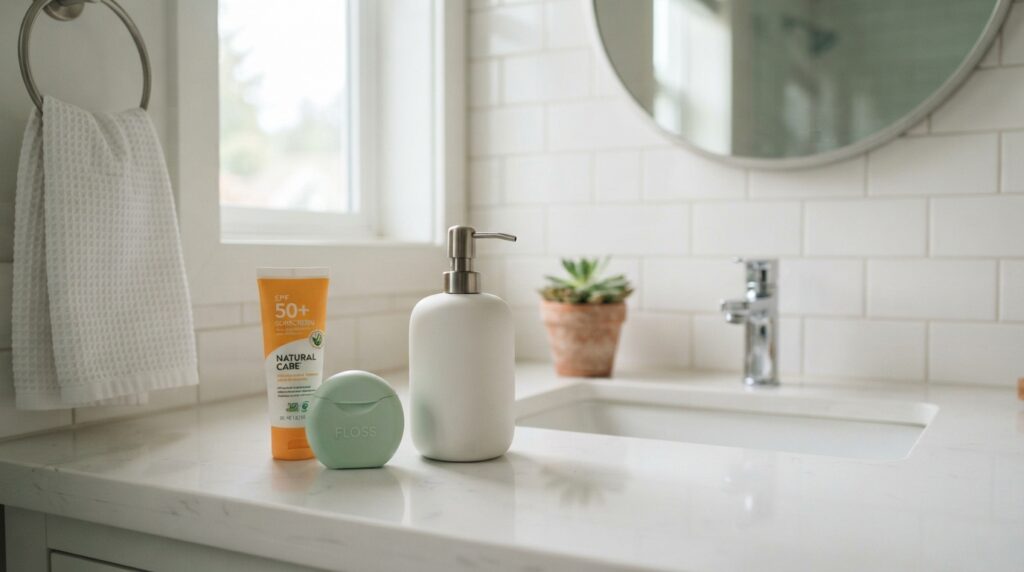
To floss, curve the floss in a C shape around one tooth and slide it gently up and down. Then move to the next tooth and repeat. Rough sawing motions can irritate the gums, so we should use a light touch.
Morning sunscreen helps protect skin exposed to daylight. One or two nickel-sized dollops can cover the face, neck, ears, and bald or thinning areas of the head. We can also apply it to other exposed areas.
Cloudy weather does not remove the need for sunscreen when our skin is exposed to daylight. We should follow the product directions for reapplication. The label gives the instructions for that specific sunscreen.
We can place oral and skin-care items where we will see them. That small choice can make it easier to remember both tasks as part of daily care. Keep floss and sunscreen somewhere visible so they are easy to remember.
Which Everyday Choices Support Long-Term Brain and Heart Health?
Quitting smoking begins to benefit the body quickly, and new learning can give the brain a regular challenge. Support helps when making a change feels difficult.
Heart rate and blood pressure drop as soon as 20 minutes after a last cigarette. Quitting can take more than one attempt, and support is available through a clinician.
People who smoke can ask a health professional about quit support. A clinician can help us find an approach that suits our circumstances. One difficult attempt does not mean we cannot try again.
Learning a new skill gives the brain something fresh to practice. We might take a dance class, join a creative writing workshop, or study a language. Setting a manageable practice time can help the activity fit around daily needs.
Automatic screen checks can take time away from an offline activity. We can set a device aside during a chosen practice time, then focus on the class, lesson, or task. This is a time choice, not a treatment for a health condition.
Brain and heart health are part of our long-term health, and small choices can support both. Asking for quit help is a practical step, not a sign of failure. Ask a health professional for a quit plan that fits our circumstances.
How Can Busy People and Students Fit Healthy Habits Into a Schedule?
A packed school day or workday calls for habits that fit the schedule we already have. Useful cues can make a small action easier to remember without adding a new block of time.
We can use existing cues, prepare a few items ahead, and place useful objects where we will notice them. A transition between tasks may offer a reset, while meal preparation once or twice per week can make weekday meals easier.
Busy schedules can include movement breaks of 5-10 minutes. We can pair one with a break between classes or a pause between work tasks. A few prepared items can also cut down on last-minute decisions.
Five healthy habits for students can include preparing school items, choosing a nourishing snack, fitting in active play or a walk, keeping a steady bedtime, and asking a trusted adult for help. Ten healthy habits for students can extend that set with regular handwashing, toothbrushing, water with meals, outdoor time, and breaks from screens.
Five healthy habits for a first-grade class can be handwashing, toothbrushing, water with meals, active play, and a regular bedtime. Teachers or caregivers can help introduce these routines in clear, age-appropriate ways.
Three schedule cues can make a school or workday easier to manage:
- Pack school materials the night before.
- Use a transition between tasks for a short reset.
- Prepare one easy meal component ahead.
We can also place a bag, water glass, or snack where we will see it when needed. A visible reminder can save a step when we are rushing out the door. Attach one small action to a reliable daily cue before adding another.
How Can We Tell Whether a Health Routine Is Working?
A routine is helping when it makes daily life feel more manageable, not more pressured. Small signs can show whether the routine fits, even when change is gradual.
Steadier energy, improved sleep, easier focus, and better coping with stress are useful signs to notice. We can check how our days feel rather than expecting every part of life to change at once.
A weekly check-in can help us see what is working and what needs to change. We can ask three questions:
- What helped?
- What felt challenging?
- What small change could make the next week easier?
During a busy period, we can scale a routine down instead of treating a missed day as failure. A shorter or simpler version may fit better until our schedule changes. The point is to find a form we can return to.
A routine that increases stress or is frequently skipped may need to be simplified. We can remove steps or choose an easier version, rather than blame ourselves for not keeping up. A workable routine should support daily life.
Trouble sleeping, persistent low mood, anxiety that affects daily life, or significant appetite or weight changes are reasons to talk with a doctor. Talk with a doctor when persistent changes in sleep, mood, anxiety, appetite or weight affect daily life.
Conclusion
A healthier routine does not require us to change everything at once. We can choose what fits our needs now and adjust as life changes.
Consistency matters more than trying to do every useful thing at once. A missed day does not erase the effort we have already made, and a small step can still count.
Choose one small action for tomorrow, decide what existing cue will remind us, and try it for a week before adjusting.