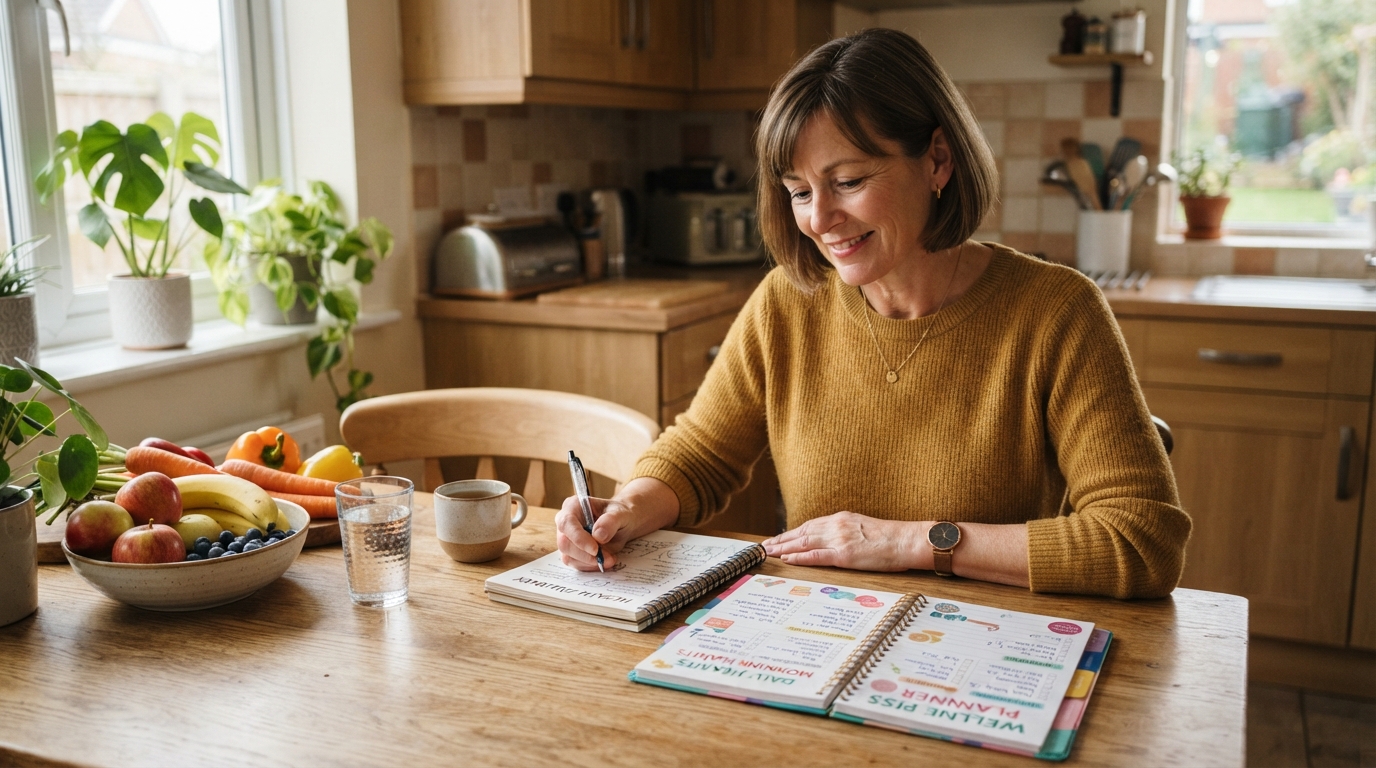










We may hope to live longer, but most of us also want to stay active, clear-minded, and connected as we age. Healthspan is the number of years we live in good health and remain able to function and participate in daily life.
Genes and life circumstances shape our health, but daily choices can support our quality of life as we grow older. Longevity secrets are not promises that we will reach 100; they are practical steps we can adapt to our own lives.
Key Takeaways
- Healthspan means years lived in good health and with daily function.
- Genes and circumstances matter, while daily habits can support well-being.
- Small steps can fit different needs, schedules, and stages of life.
- No habit can promise a certain lifespan or prevent every disease.
- Small, repeatable changes are a more useful starting point than chasing a single secret.
What Are 10 Longevity Secrets for a Longer Life?
U.S. life expectancy reached 79.0 years in 2024, but a national average cannot tell us how long any one person will live. The average rose 0.6 years from 2023, while women’s life expectancy was 4.9 years longer than men’s. Population averages describe groups, not personal futures.
No habit guarantees a particular lifespan. Still, we can make choices that support health and lower some risks across the years. The same core habits can help women pursue a longer, healthier life; the population gender gap does not predict any individual woman’s lifespan.
Life expectancy is a population measure, not a personal deadline or guarantee.
Ten useful levers are eating mostly minimally processed plant foods, moving regularly, and building strength. We can also sleep consistently, manage stress, keep close relationships, and pursue a sense of purpose.
Four more choices matter: avoid smoking, limit or avoid alcohol, and follow preventive care that fits our age and health. Together, these habits offer a practical answer to how to live longer and healthier without promising a set number of years.
The U.S. average rose in 2024, but each person’s health and life expectancy reflect many factors. We can use the number as context, not as a forecast. Treat life expectancy as a population measure, not a personal deadline or guarantee.
How Much Exercise Supports a Longer Life?
Adults can work toward 150-300 minutes of moderate activity or 75-150 minutes of vigorous activity each week, using an equivalent mix if that suits them better. These adult guidelines are a useful target, not a demand to start at full pace.
Moderate activity raises our breathing while letting us talk; vigorous activity makes talking harder. The U.S. activity guidelines offer these ranges for adults. Study ranges below describe associations, not a prescription to exceed guidelines.
How much weekly activity is associated with lower mortality?
A cohort study followed 116,221 adults for up to 30 years. Its results link certain activity levels with lower mortality, but they do not prove that activity alone caused the difference.
| Activity pattern | Minutes per week | Mortality finding | Practical meaning |
|---|---|---|---|
| Moderate activity | 300-599 | 26%-31% lower all-cause; 28%-38% lower cardiovascular; 25%-27% lower non-cardiovascular mortality | Higher-volume study range |
| Vigorous activity | 150-299 | 21%-23% lower all-cause; 27%-33% lower cardiovascular; 19% lower non-cardiovascular mortality | Study range linked with lower mortality |
| Mixed activity | 150-600 moderate plus 75-300 vigorous | About 35%-42% near-maximum mortality reduction | Several combinations showed near-maximum associations |
| Starting levels below guidelines | 150-300 moderate or 75-150 vigorous | Modest activity levels linked with greater benefits | A gradual first target |
Can everyday movement help us live longer?
Planned exercise is only one way to get physical activity. Movement built into daily life can add up, especially when it replaces long stretches of sitting.
A 2025 study of Blue Zone centenarians found that activity often came through manual work, walking, outdoor sports, and household tasks. Those examples show how movement can belong to ordinary routines, not just gym sessions.
- Walk for errands or take a stroll after a meal.
- Garden or do manual work around the home.
- Join outdoor sports that fit our ability and interests.
- Count household activities that keep us moving.
Regular physical activity supports heart health and can help manage blood pressure and disease risk. We can also find more manageable movement ideas for everyday well-being. If we are currently inactive, a modest increase toward the guideline range is a more realistic starting point than trying to match the study’s highest activity levels.
Which Foods Belong in a Longevity-Focused Diet?
A useful starting point is to make plant foods the foundation of most meals, then add protein and fats that fit our needs and preferences. Plant-forward eating does not require becoming vegetarian.
Vegetables, fruits, beans, nuts, seeds, and whole grains can all have a place. Fish can also fit, and familiar meal patterns offer flexible ways to put these foods together.
Why put plant foods at the center of meals?
Plant-based diets can include animal foods, including fish. Studies have linked plant-based diets, including Mediterranean and DASH-style diets, with lower risks of cardiovascular disease and cancer.
Women who most closely followed a plant-based Mediterranean diet were 23% less likely to die from any cause than women who did not closely follow that pattern. That result describes an association, not a promise for any one person.
How do Mediterranean, DASH, and Blue Zones eating patterns differ?
These patterns overlap in their focus on plant foods, but each has its own emphasis. The Blue Zones’ Power 9 includes eating a primarily plant-based diet.
| Pattern | Foods emphasized | Practical meal example |
|---|---|---|
| Mediterranean | Vegetables, fruits, whole grains, legumes, nuts, fish, olive oil | Beans and vegetables with whole grains |
| DASH | Fruits, vegetables, whole grains, lower-fat dairy | Vegetables, beans, and whole grains |
| Blue Zones | Mostly plant foods, with beans as a staple | A bean-based dish with vegetables |
How can food support longevity and better health?
A steady pattern matters more than one special ingredient. No single food acts as a guaranteed longevity food, even when it appears in a health-supporting diet.
For instance, olive oil can flavor vegetables and grains, while beans can bring plant protein to a meal. The everyday meal ideas we choose should suit our culture, budget, and taste.
Food can support health without turning every meal into a test of willpower. A sustainable pattern is one we can keep eating, not a short-lived attempt to follow a perfect menu.
How Can We Practice Okinawan Portion Awareness?
Hara hachi bu is a reminder to stop eating when we feel about 80% full, rather than waiting until we feel stuffed. This Okinawan practice is a cue to pause, not a rule to leave a fixed amount of food on the plate.
We can use it by paying attention to our body as a meal unfolds. Letting a meal last at least 20 minutes can help: pace each bite and chew slowly.
A practical way to try hara hachi bu is to make room for a mid-meal check. Start with these steps:
- Serve a comfortable first portion.
- Sit down to eat.
- Take smaller bites.
- Chew slowly.
- Pause partway through and check hunger and fullness.
The goal is awareness, not strict portion control. Hunger can change with activity, health, and the time since our last meal, so a fixed plate rule may not suit us.
Staying hydrated matters too. A hydration study included more than 11,000 adults, but an association in a study does not prove that water alone extends life.
If a meal is rushed, start by adding a few minutes of unhurried eating instead of focusing on a perfect portion.
How Does Sleep Support Healthy Aging?
Most adults can use 7-9 hours a night as a practical target, while noticing how rested they feel during the day. Sleep needs vary, but regular rest supports health as we age.
The National Heart, Lung, and Blood Institute recommends adults get 7-9 hours of sleep per day. Over time, too little quality sleep is linked with higher risks of heart disease, obesity, high blood pressure, diabetes, and stroke.
A consistent sleep schedule can help make rest more regular. We might keep similar sleep and wake times, build a calming wind-down routine, or cut late-night phone use.
We do not need to change every part of the evening at once. A quieter last part of the day can make it easier to settle, while a steady wake time gives the routine a clear anchor.
Naps belong to some cultural routines. People in Ikaria traditionally include a daily nap, but a nap should not replace enough nighttime sleep.
Sleep can affect how well we function the next day, from attention to mood. If sleep problems persist or interfere with daily functioning, discuss them with a health professional.
What Helps Us Manage Stress Day to Day?
A short pause outdoors can make stress management feel more reachable than waiting for a full day off. Green space offers a simple setting to step back from daily demands.
Spending 20-30 minutes in green space a few times each week may reduce stress, anxiety, and depression. A park, garden, or tree-lined path can work, so we can choose a place that is easy to reach.
Which everyday pauses can lower stress?
We can use a short outdoor break as a reset between tasks or after a difficult moment. Even when we cannot reach a park, pausing outside can offer a change of scene.
The aim is not to remove every source of stress. It is to make room for a brief pause before we return to the next part of the day.
How can we make calming habits easier to keep?
Yoga adds gentle movement and focus, while meditation asks us to give attention to the present moment. Journaling can help us sort thoughts on paper, and deep breathing offers a brief practice anywhere.
Each option asks for a different kind of effort. We might prefer writing a few lines at a desk, or taking slow breaths while waiting for a bus.
Choose the option that feels manageable rather than stacking several new routines at once. One small practice is easier to fit into a busy lifestyle than a long list of tasks.
Stress habits can support well-being, but calm cannot prevent every illness or stop aging. Choose one repeatable stress reset that fits into an ordinary week.
How Do Friends, Family, and Purpose Shape Aging?
Regular contact with people we trust can make healthy routines feel less solitary and more sustainable. Connection can add meaning to daily life without deciding anyone’s lifespan.
The Blue Zones’ Power 9 describes recurring practices, not a formula everyone must copy. It includes daily movement, stress relief, a sense of purpose, supportive social networks, and stable extended-family structures.

The five Blue Zones are Loma Linda, Ikaria, Okinawa, Sardinia, and Nicoya. These places offer examples of different settings, not a single way of living that everyone must adopt.
In Okinawa, a moai is a long-standing group of friends who support one another. A study of 28,000 people linked more frequent social activity with longer survival, though that link does not prove that social contact alone caused it.
We can make connection easier by giving it a regular place in the week. A shared activity offers a reason to meet and something to look forward to.
A recurring walk, meal, or call is a concrete way to make connection part of an ordinary week.
Which Measures Help Us Track Healthy Aging?
A healthy-aging picture combines measures such as blood pressure and glucose with function, rather than relying on one number. Multiple systems matter, and no single sign can predict a long life with certainty.
A 30-year cohort study followed 2,815 people from four generations, with measurements every five years. Its healthy physiological aging index included blood pressure, glucose, creatinine, lung function, and cognitive functioning.
What signs may point to a longer life?
The study ranked body-mass index, waist measures, cholesterol-related measures, diet, and education among the most important predictors of healthy physiological aging. The table shows how predictor areas differed from measures in the index.
| Predictor area | Examples identified in the cohort | Measures included in the healthy-aging index |
|---|---|---|
| Body size | BMI and waist measures | Blood pressure and glucose |
| Cholesterol-related measures | Cholesterol-related measures | Creatinine |
| Lifestyle and context | Diet and education | Lung function and cognitive functioning |
These measures describe different parts of health, not a single score that can tell us how many years we have. Checkups help us see changes and discuss what they may mean for our own risk.
Can healthy habits help us live past 100?
No habit can guarantee that we will live past 100. Habits can support health and functioning, while individual outcomes vary with many factors.
The model’s R was 17%, so it should not be treated as a precise personal forecast. A 2026 review of 124 studies found that exceptional longevity reflects interacting genetic, biological, lifestyle, social, and environmental factors.
The review also notes that genetic influence appears to grow stronger beyond age 100. Use checkups to discuss personal risk factors and appropriate screening with a clinician.
Which Habits Can Undermine a Longer Life?
Avoiding tobacco and choosing less alcohol can reduce exposure to preventable health risks. Both choices can support health, though changing a long-standing habit may take time.
The Centers for Disease Control and Prevention identifies smoking as a major preventable cause of disease and death. The U.S. Surgeon General’s advisory identifies alcohol consumption as a cause of several types of cancer.

People who do not drink do not need to start for health reasons. Reducing alcohol is a personal choice we can discuss with a clinician, especially if cutting back feels hard.
If quitting or cutting back feels difficult, ask a clinician about practical support rather than trying to manage it alone.
Small steps can make a change feel more doable. We can try these actions:
- Identify smoking triggers.
- Ask a health professional about quit support.
- Remove smoking supplies from the home.
- Consider alcohol-free days.
- Seek support if cutting back feels difficult.
Smoking and alcohol are health risks, not moral failings. Support can help us make a change at a pace that fits our circumstances.
Conclusion
We do not need to change everything at once to make a useful start. One manageable change is a better first step than a full lifestyle overhaul.
We can pick one habit this week and notice whether it fits our schedule, energy, and needs. If it feels sustainable, we can keep it; if not, we can adjust the plan.
Pick one small habit to practice this week, then decide whether it is ready to become part of your routine.