









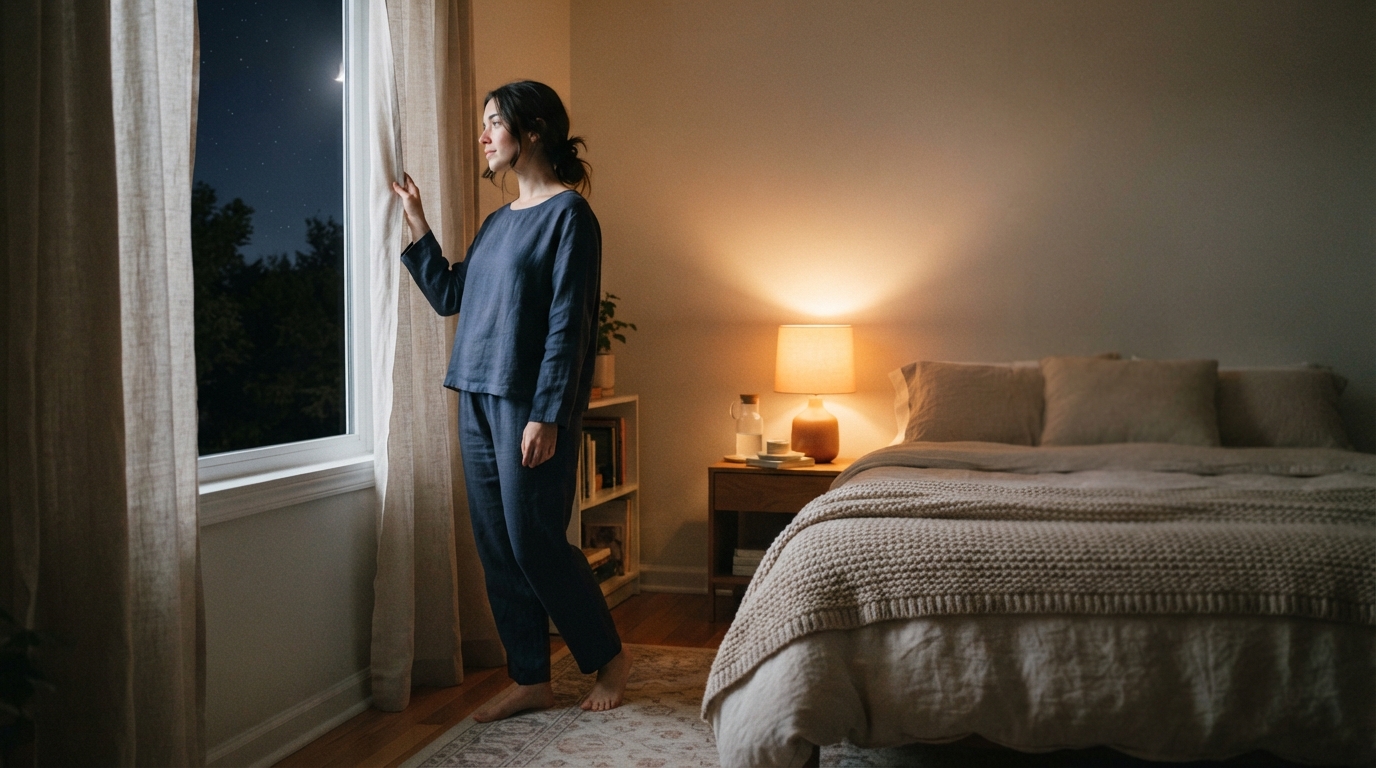
Sleep hygiene matters when more than one-third of U.S. adults do not get enough sleep. A restless night can make the next day feel harder before it begins. About 14.5% of adults have trouble falling asleep, and 17.8% have trouble staying asleep.
Sleep hygiene means changeable habits and conditions that can support sleep quality and duration. These changes may help, but they do not promise a cure or guarantee a good night sleep. Better sleep can support our health, mood, and focus during the day.
We can use the 10 steps here as practical options, not a rigid checklist. Our sleep needs and daily lives differ, so one habit may help more than another. Start with one change we can repeat tomorrow instead of trying to control every minute of the night.
Key Takeaways
- Choose a wake-up time we can keep most days.
- Use a brief bedtime routine to signal that the day is ending.
- Adjust light, noise, and comfort in the bedroom environment.
- Notice how food, drinks, and daytime habits affect our rest.
- Track sleep patterns and ask a doctor about persistent problems.
Sleep Hygiene: What Does It Include?
Sleep hygiene brings together adjustable daily behaviors and bedroom conditions that can support sleep. Good sleep hygiene is a practical framework, not a guarantee of quality sleep or a standalone cure. Its benefits come from habits we can repeat and adjust to fit our needs.
Research has not always used one clear definition. A 2024 bibliographic review identified 548 adult studies, yet only 44% defined sleep hygiene. Components were defined in up to 70% of observational studies and 35% of intervention studies.
| Study group | Studies reviewed | Definition detail |
|---|---|---|
| All adult studies | 548 | 44% defined sleep hygiene |
| Observational studies | 250 | Components defined in up to 70% |
| Intervention studies | 298 | Components defined in up to 35% |
The review found that studies considered caffeine in 51% of cases, alcohol and exercise in 46% each, and sleep timing in 45%. Light appeared in 42%, naps in 39%, smoking in 38%, noise in 37%, temperature in 34%, wind-down routines in 33%, and stress and stimulus control in 32% each.
Sleep hygiene can guide useful changes, but it cannot promise that sleep problems will disappear.
A 2023 review recommends 7 to 9 hours of sleep, a steady sleep-wake schedule, regular exercise, a bedtime routine, and a contemplative practice. The 2024 bibliographic review shows why researchers still need clearer terms. Useful sleep hygiene tips focus on repeatable habits, while healthy sleep looks different across people. A practical plan starts with the habits most likely to interfere with our own nights.
Step 1: Set a Wake-Up Time You Can Keep
A fixed wake-up time is often easier to protect than a perfect bedtime. Consistent sleep starts with a steady time every day, including weekends, because it helps anchor our sleep schedule. Adults are generally advised to allow 7 to 9 hours for sleep, though the right amount can differ.
Choose a wake time that fits real mornings, then count back to allow enough sleep. We do not have to force an abrupt bedtime change. Gradual shifts can make a new schedule easier to keep.
- Choose a realistic wake-up time that works on most days.
- Count back 7 to 9 hours to find a bedtime range to try.
- Shift an existing schedule gradually, by up to an hour or two at a time.
- Keep the wake-up time steady across the week when possible.
A new schedule may feel awkward at first, especially if our current bedtime is much later. We can make the shift in stages rather than changing everything at once. Give each adjustment time to become a habit before moving it again.
After a week of insufficient sleep, weekend catch-up sleep may be beneficial. It can help us recover, though it does not make a steady schedule unnecessary. Some weekends also bring early plans, so a realistic weekday anchor matters more than a plan we cannot keep.
Other everyday wellness habits can support a routine that feels manageable. We can note how rested we feel and whether our usual wake time remains practical. After a week of short nights, treat weekend catch-up as recovery, not proof that the schedule is fixed.
Step 2: Build a 30-Minute Bedtime Routine
After brushing our teeth, a few pages of reading or gentle stretching can mark a clear shift toward rest. A 30-minute wind-down gives us time to move from daily tasks toward sleep. The routine can include calming activities such as soft music, light stretching, or reading.
Keep the bedtime routine short and repeatable, rather than aiming for a perfect ritual. A regular sequence can make evenings feel less rushed. A 2023 review also recommends a regular bedtime routine and a contemplative practice.
We can build the sequence around things we already do each evening. The details are personal, so there is no need to add a long list of tasks. A routine that fits a busy night is more useful than one we often skip.
- Change into pajamas and put away the day’s work.
- Brush teeth and wash up at an unhurried pace.
- Read a few pages in soft light.
- Stretch gently or try slow, paced breathing.
Some nights, reading may feel calming; other nights, gentle stretching may work better. Soft music can also help us make the transition without adding another task. We can keep the same order while choosing among activities that feel restful.
Using an existing cue, such as brushing our teeth, can help the sequence stick. If one part feels like a chore, we can replace it with something simpler. For more ideas on building daily habits that last, we can connect the new routine to an established one. Keep the routine simple enough to repeat on busy evenings.
Step 3: Manage Light and Screens Before Bed
Evening light and screen use are two controllable exposures that can make winding down harder. A device-free buffer of 30-60 minutes before bed can reduce screen stimulation and blue-light exposure. Screens may keep our minds active as well as expose us to light.
Put devices away for 30-60 minutes before bedtime when we can. A phone on the pillow can invite one more message, video, or work task. The goal is to reduce both light and mental activity, not just change the screen’s color.
We can leave a phone across the room, silence alerts, or turn it off for the night. If we need it as an alarm, placing it out of reach can make checking it less automatic. A filter may change light exposure, but it does not remove the pull of messages or scrolling.
Household lights can also become dimmer as the evening goes on. This can help us move toward a calmer mood without turning the whole home dark. A lamp with a soft glow may be easier on the eyes than bright overhead lighting.
Late-day light exposure is associated with fragmented, poor-quality sleep. A bright screen is not the only source; strong room lighting can keep us alert, too. We can make a simple change by lowering the lights in shared spaces before bed.
Some nights require a phone for family, work, or safety needs. In that case, silencing nonessential alerts and avoiding stimulating content still gives us options. Keep the bedroom dim after sunset without making a device filter the only change.
Step 4: Make Your Bedroom Dark, Quiet, and Comfortable
A room that is too bright, noisy, or warm can make it harder to settle into uninterrupted rest. A comfortable bedroom environment helps reduce disruptions without requiring expensive changes. We can start with one source of light, noise, or discomfort.
A room temperature around 65°F-68°F is a practical starting range, not a strict rule. Personal comfort matters more than holding one exact setting. The same room can feel different depending on bedding, season, and personal preference.
Block Light and Reduce Noise
Outside light can enter through uncovered windows, street-facing glass, or a bright hallway. Curtains or shades can block much of it, while a sleep mask may suit people who prefer one. Rugs can absorb some sound and soften echoes in rooms with hard floors.
Earplugs can lower ordinary background noise, and white noise can mask sounds that come from outside. White noise does not remove the noise source, so it may not solve a loud or sudden disturbance. We can try a low, steady sound and stop if it feels distracting.
Keep the Room Cool and Comfortable
A cool room can feel more restful than one that is stuffy or too warm. We can adjust the thermostat, bedding, or airflow to find a comfortable setting. There is no need to force the room to one temperature if it leaves us cold.
Noise and light may change from night to night. A passing car, a hallway lamp, or a neighbor’s television can become more noticeable when the room is quiet. A small adjustment can help us find the main source before we change several things.
Check the Mattress, Pillow, and Bedding
A worn or uncomfortable mattress and pillow can interfere with comfort. We can check whether the mattress still supports our usual sleeping position and whether the pillow feels comfortable. Bedding should feel suitable for the room, without trapping too much heat.
We do not need to buy new items just because a product is old. A sagging surface, a lumpy pillow, or bedding that feels too warm may point to the problem. Testing one change at a time makes it easier to tell what helped.
| Room concern | Practical adjustment | Example |
|---|---|---|
| Outside light | Cover the window | Curtains or shades |
| Noise | Mask or soften sound | Rug, earplugs, or white noise |
| Room temperature | Cool the room for comfort | Start around 65°F-68°F |
| Worn sleep surfaces | Check comfort and support | Mattress, pillow, and bedding |
A room can feel calmer when light and sound have fewer ways to interrupt us. We can begin with the easiest change, such as closing curtains or moving a rug. Change one room condition at a time so we can tell whether it helped.
Step 5: Choose Food and Drinks That Support Sleep
A late coffee, evening drink, nicotine, or heavy dinner can each work against an otherwise steady schedule. These habits can affect how easily we fall asleep or how often we wake. A small timing change may be easier to test than avoiding every favorite food.
Caffeine can keep us alert for up to 8 hours, so move it earlier when sleep is difficult. Alcohol may feel sedating at first, yet it can disrupt sleep later in the night. Nicotine can stimulate the body and make settling down harder.
Caffeine, Alcohol, and Nicotine
Bad sleep hygiene can include caffeine late in the day, alcohol in the evening, or nicotine close to bedtime. We can track when we use these substances and how the night goes. Caffeine’s effects can last up to 8 hours, so an afternoon coffee may still matter at bedtime.
Alcohol can make falling asleep feel easier at first, but that effect may not last through the night. Limiting or avoiding evening drinks can help us see whether sleep becomes less disrupted. Nicotine is stimulating, so avoiding it near bedtime may also help.
Meal Timing and Late Snacks
A large meal close to bedtime can leave us uncomfortable as we try to rest. Finish evening meals at least 3 hours before bedtime when possible. If hunger comes later, a light snack may feel better than a heavy meal.
Our response to a particular food or drink can be personal. A brief note can show whether a late coffee, drink, or dinner repeatedly comes before a rough night. We can then change one factor instead of guessing at several at once.
| Item | Possible sleep effect | Practical adjustment |
|---|---|---|
| Caffeine | May keep us alert for up to 8 hours | Move it earlier |
| Alcohol | May disrupt sleep later at night | Limit or avoid evening drinks |
| Nicotine | Can stimulate the body | Avoid it near bedtime |
| Large late meals | May cause discomfort near bedtime | Finish 3 hours before bed |
When we change a habit, keeping the rest of the evening steady can make the result easier to read. A lighter snack may suit us better than going to bed hungry. If a particular food or drink repeatedly precedes a poor night, test a smaller amount or earlier timing.

Step 6: Get Daylight and Move During the Day
Morning sunlight and a daily walk pair two daytime habits that can support nighttime sleep. The circadian rhythm is the body’s internal timing system that helps regulate sleep and wakefulness. Daylight, especially sunlight, is a key cue for this rhythm.
About 30 minutes of safe sunlight during daytime, ideally in the morning, is one practical target. We can start smaller if a full half hour does not fit the day. A 10-minute walk is a manageable first step.
Regular exercise can make it easier to sleep at night and support sleep quality. The best time for activity differs by person. Some people feel relaxed after an evening workout, while others feel too energized to settle.
- Take a morning walk around the block or to a nearby stop.
- Step outside for a brief break during the workday.
- Schedule a regular workout at a time that suits our routine.
- Use gentle stretching if a late workout feels activating.
We can fit movement into an ordinary day without needing special equipment. A short walk after lunch or a walk during a phone call can make activity easier to repeat. On busy days, even a brief outdoor break adds daylight exposure.
Safe sunlight means protecting our skin and eyes as needed for the conditions. Weather, work hours, and mobility can affect how we get outside. A bright outdoor break can still be useful, even when it does not last 30 minutes.
A 2023 review of sleep habits recommends regular exercise among several practices that support healthy sleep. We can watch for a pattern between strenuous late workouts and delayed sleep. Choose a movement time we can sustain and notice whether strenuous late workouts delay sleep.
Step 7: Keep Naps Short and Early
A long nap late in the day can leave us less ready for sleep at bedtime. When daytime rest is needed, keep the nap to 30 minutes or less and take it in the early afternoon. A shorter, earlier nap is less likely to disrupt nighttime sleep.
Limit naps to 30 minutes or less, especially when falling asleep at night is already hard. Long naps can reduce our sleep need later in the day. A late nap may also shift the time we feel ready for bed.
A quick rest can help us get through a tiring afternoon, but it should not take the place of enough nighttime sleep. We can set an alarm if we tend to sleep longer than planned. Keep the nap space calm, then return to the day when the alarm rings.
Naps may not help people who already struggle to fall asleep or stay asleep at night. If we notice that a nap makes bedtime harder, we can skip it and see whether nights improve. If naps repeatedly make bedtime harder, skip them rather than extending them.
Step 8: Reserve Your Bed for Sleep and Sex
Working from bed can blur the boundary between activity and rest. Reserving the bed for sleep and sex can strengthen the mental link between getting into bed and winding down. This is a helpful cue, not a set of strict rules for the whole bedroom.
Move work, television, and phone use away from the bed. A laptop on the blankets can make the bed feel like an office, while a show may keep us alert. Reading that holds our attention can also be better suited to a chair.
We can work at a desk, use a couch for television, or sit in another spot to read. If space is limited, moving a laptop off the bed still gives work and rest clearer places. The goal is a stronger association, not a perfect home setup.
Phone use can make it easy to keep scrolling when we meant to rest. We can leave the phone on a table or shelf rather than bringing it under the covers. The same choice helps separate work messages from our sleep space.
Small changes can be enough to make the bed feel less like a place for daily tasks. We do not have to police every moment or feel guilty about an occasional exception. Move work and scrolling to another place before getting under the covers.

Step 9: Get Out of Bed When Sleep Won’t Come
Lying awake while watching the clock can turn bedtime into a source of frustration. If we have not fallen asleep after about 20 minutes, get up and move to a quiet place. The guideline is a rough cue, not a timer that forces sleep.
After roughly 20 minutes awake, try a calm activity in low light until drowsiness returns. Clock-checking can make us focus on the time left before morning. That pressure can make it harder to settle.
We can read something calm or stretch gently in a quiet spot. Keep the light low enough to feel restful, and avoid turning the pause into a new work session. If we still feel alert, continue the calm activity for a while.
The 20-minute mark is approximate because we may not know exactly when we fell asleep. We can use our growing frustration or sense of wakefulness as a cue instead. The point is to leave the bed when it has become a place for worrying.
When drowsiness returns, we can head back to bed and try again. There is no need to check the clock repeatedly or meet a strict deadline. Return to bed when drowsiness returns, not simply because the clock says it is bedtime.
Step 10: Track Patterns and Know When to Get Help
A brief log can make a confusing sleep pattern easier to describe at a medical appointment. A sleep diary records sleep and related daily habits, giving us details to review instead of relying on memory. Keep one for at least 2 weeks.
Record sleep times, awakenings, naps, activity, caffeine or alcohol, and medications. Quality sleep means sleep that feels uninterrupted and refreshing. A simple sleep hygiene checklist can help us spot patterns without turning each night into a test.
Keep a Short Sleep Diary
We can use a notebook or a basic note on our phone. Include only details we can track consistently, then look for habits that often come before a difficult night. The aim is to describe our experience clearly, not to grade ourselves.
| Diary entry | What to record | Examples of details |
|---|---|---|
| Bedtime and wake time | When we went to bed and got up | 10:30 p.m.; 6:30 a.m. |
| Nighttime awakenings | How often and how long we woke | Two awakenings; one felt brief |
| Naps and exercise | Time and length of naps; activity | 20-minute nap; evening walk |
| Caffeine or alcohol and medications | What we used and when | Afternoon coffee; evening medicine |
Before speaking with a clinician, we can jot down a few points that explain how sleep affects daily life:
- The main concern, such as trouble falling asleep.
- How often the problem occurs and when it began.
- How it affects daytime energy, focus, or mood.
- Relevant medications, caffeine, alcohol, or other substances.
- Changes we have already tried and what happened.
Talk With a Doctor About Persistent Problems
Sleep hygiene alone will not cure sleep problems. Talk with a doctor about persistent trouble falling asleep, repeated awakenings, or feeling tired despite enough sleep. Sleep disorders can include insomnia, restless legs syndrome, narcolepsy, and sleep apnea.
A doctor can assess symptoms and discuss whether more care is needed. We do not need to wait until every possible habit has changed before asking for help. Useful sleep hygiene articles explain adaptable habits without promising a cure.
Persistent sleep trouble deserves an assessment, even when we have made practical changes.
Patterns in a diary may help us explain what happens at night and during the day. Bring the record and our main questions to the appointment. Ask a clinician for an assessment when sleep trouble persists despite practical changes.
Conclusion
Better rest often begins with one small habit we can sustain. Trying to change every part of our day at once can feel like too much, while one repeatable step gives us a clear place to start.
We can notice how that change affects our nights and adjust if it does not fit. Persistent or severe sleep concerns deserve a conversation with a doctor, especially when tiredness affects daily life.
Tonight, choose one change and put it into practice; if sleep problems persist, talk with a doctor.