








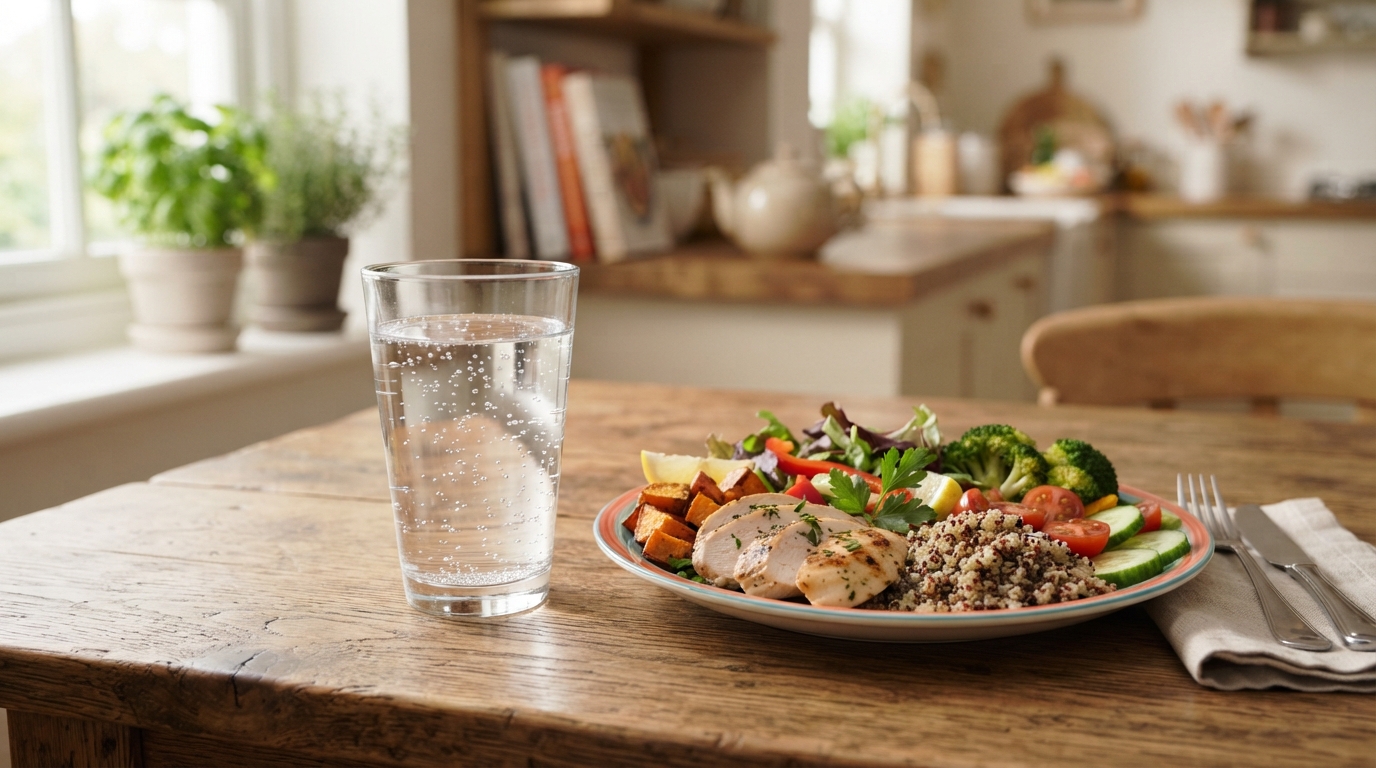
A glass of water seems simple, but the fluid we get from drinks and food helps keep ordinary body functions on track. In the United States, questions about water intake often come with confusing rules and long lists of promised health effects. Total water intake means the water we get from plain water, other beverages, and food. Our goal is to offer useful, practical information about everyday hydration, personal needs, and safe choices. General guidance can help us think about our habits, but it cannot replace medical advice for someone with a health condition or fluid restriction. The right amount can change with age, activity, climate, and other personal factors. Our best starting point is to understand the difference between a useful daily guide and a personal prescription.
Key Takeaways
- Water helps prevent dehydration and supports normal body functions.
- Total water intake includes drinks and water-rich foods, not just plain water.
- Daily needs change with health, activity, climate, and life stage.
- Plain water is a simple choice, but other drinks and foods add fluid.
- Drinking too much too quickly can be dangerous.
- A clinician can set a safe target when health needs affect fluid balance.
What Are the Hydration Benefits for Everyday Health?
Water matters because it helps us avoid dehydration and supports the body’s normal work. Five important reasons water matters include keeping body systems working and helping prevent dehydration. Those basic roles support health across the day, even when we do not notice them.
Water is part of blood and other body fluids, and cells need it to function. Drinking water helps prevent dehydration and supports normal body function. Other benefits connect to thinking, digestion, temperature control, and normal waste removal. These are real functions, not a promise that water cures illness.
We should judge a benefit by whether it supports a real body function, not by how long a list can be made.
Searches for 20 benefits of water can count the same basic role several times, such as describing many cell tasks as separate benefits. A list of 100 benefits of drinking water is not a sound promise of 100 distinct, proven health effects. Longer lists can make ordinary functions sound like special treatments, so it helps to look closely at each claim.
Water is essential, but more is not always better. Our bodies need enough fluid to replace normal losses, and personal needs are not identical. We can think of water as a basic part of daily health rather than a shortcut to perfect health. The strongest claims stay close to what water actually does.
How Does Water Support Brain Function and Daily Energy?
A small fluid deficit can make it harder to concentrate, remember, or respond quickly. Even mild dehydration may affect memory, mood, concentration, and reaction time. The effects can make a school day, work shift, or long drive feel harder.
Fluid loss of about 2% of body weight may affect these skills for some people. Drinking water is most likely to help when it corrects a fluid deficit. It is not a guaranteed energy boost for someone who already has enough fluid.
We may notice a change in mood or feel mentally slower after sweating, spending time outdoors, or forgetting to drink during a busy day. Plain water can help replace lost fluid in many ordinary situations. The benefit comes from meeting the body’s need, not from water acting like a stimulant.
People sometimes search for 10 benefits of drinking water, but there is no need to turn one body function into ten separate medical claims. Clearer thinking after correcting dehydration is one useful example. Mood, focus, memory, and quick responses are related effects, not four guaranteed results for every person.
Sleep, stress, illness, and many other factors can also shape how alert we feel. If tiredness or brain fog persists after normal drinking, we should not assume water is the only cause.
How Does Water Help Digestion and Waste Removal?
Water supports digestion in part by helping keep bowel movements regular. Enough fluid helps the body move waste through the digestive tract. Dehydration may contribute to constipation, especially when fluid intake stays low.
Water also plays a role in how the body handles waste. Waste leaves the body through urination, perspiration, and bowel movements. These are normal routes, and the body’s organs manage them without needing a special “detox” drink.
- Urination carries waste out in urine.
- Perspiration releases small amounts of water and other substances through the skin.
- Bowel movements remove waste from the digestive tract.
Dehydration may also contribute to kidney stones in some cases. Drinking enough fluid can support normal urine flow, but it does not guarantee that stones will not form. A person with a history of stones may need advice that fits their health and treatment plan.
Ongoing constipation can have many causes, including diet, medicines, or health conditions. Kidney-stone symptoms also need appropriate medical care rather than a home hydration plan alone. Drinking enough to avoid dehydration supports normal waste removal, but it is not a substitute for care when symptoms persist.
How Does Water Regulate Body Temperature?
Sweating cools us as it evaporates from the skin, but that process also loses body water. Evaporation removes heat from the skin and helps maintain a normal body temperature. When the air is hot or activity is hard, sweat losses can rise.
Water loss through the skin can range from 0.3 liters per hour in sedentary conditions to 2.0 liters per hour during high activity in heat. That range shows how widely fluid loss can change; it is not a drinking target. A person’s activity level and surroundings affect how much water leaves the body.
Hot climates and strenuous exercise can make it harder to replace fluid at the same pace it leaves the body. Clothing, rest breaks, and time in the heat also matter. The number should not be used as a personal estimate without considering the full situation.
Replacing fluid supports the body’s cooling process, but it does not make anyone immune to heat illness. Heat stress can still develop during demanding activity, even when someone drinks. During strenuous activity in heat, shade and rest matter alongside fluid replacement.
How Does Hydration Support Joints, Muscles, and Circulation?
Water helps lubricate our joints and cushion sensitive tissues, including the spinal cord. Body water is part of the fluids and tissues that support normal movement. It also helps carry nutrients around the body.
Cartilage, the firm tissue that covers the ends of bones in many joints, contains about 80% water. That figure describes cartilage, not a reason to drink extra water as a joint treatment.
| Body area | Water’s role | Practical meaning |
|---|---|---|
| Joints | Helps lubricate and cushion them | Supports normal joint movement |
| Spinal cord and sensitive tissues | Helps protect and cushion tissues | Part of normal tissue support |
| Cartilage | About 80% water | Extra drinking water does not cure joint pain |
Muscles also contain water, and fluid balance helps the body work during movement. That does not mean drinking beyond our needs will improve strength or prevent every cramp. Heat, exertion, rest, and health all affect how we feel during activity.
Water’s presence in cartilage does not mean drinking extra water cures joint pain. Pain may come from injury, inflammation, or other causes that need a different response. New or persistent joint pain needs more than a hydration adjustment.
Can Drinking Water Improve Skin Health?
Drinking enough to avoid dehydration supports the body, but it does not promise a visible change in our skin. Normal fluid intake helps the skin perform its usual role as part of the body. Drinking extra water is not a proven shortcut to clear skin or fewer wrinkles.
When dehydration is corrected, the body has the fluid it needs for normal function, including skin function. More water than we need is not a guaranteed cosmetic treatment. It cannot replace care for a skin condition or ongoing dryness.
Skin can feel dry for many reasons, such as weather, products, or a health issue. A person who has persistent dryness may need a change in skin care or advice from a health professional. Simply increasing water intake may not address the cause.
We can think of hydration as one part of general health, not a promise about appearance. Changes in skin can take more than one kind of care, and some problems need a proper assessment. Persistent irritation or dryness deserves a skin-care assessment rather than a forced increase in fluids.
Does Drinking Water Help With Weight Management?
Plain water can support a lower-calorie choice when it replaces a sugary drink. The swap can lower caloric intake because plain water has 0 calories. Sugary drinks add calories while often providing little nutritional value.
Water itself does not cause weight loss on its own. It is useful when it replaces a drink with calories, but that is different from claiming water reliably boosts metabolism. The result depends on what we choose instead.
A soda, sweetened tea, or other sugary drink can add calories to a diet. Choosing water in that moment may reduce the drink’s calorie contribution. That change can support a broader plan, but it does not erase the role of meals and snacks.
Weight management involves food choices, activity, sleep, and overall diet. A single drink choice may help, but it cannot carry the whole plan. We should treat water as one useful swap, not a stand-alone weight-loss plan.
How Much Water Should We Drink Each Day?
For a general adult reference, total water intake is about 15.5 cups a day for men and 11.5 cups for women. Those amounts count water from food and all beverages, not only plain water.
These are adequate-intake references, not exact personal prescriptions. The familiar 8×8 rule means eight 8-ounce glasses per day. It is a simple plain-water mnemonic, not a universal requirement.
Adult Reference Amounts
| Reference | Amount | What it counts |
|---|---|---|
| Adult men | 15.5 cups per day | Total water from food and all beverages |
| Adult women | 11.5 cups per day | Total water from food and all beverages |
| 8×8 rule | Eight 8-ounce glasses daily | Plain-water mnemonic, not a total-water target |
The 8×8 rule can be easy to remember because it gives one simple number. Still, a person who eats water-rich foods or drinks other beverages gets fluid beyond plain water. Treating the mnemonic as a strict prescription can lead us to ignore personal needs.
Why Daily Needs Change
There is no single calculator that can prescribe the right amount of water for everyone. Age, sex, pregnancy status, activity, and breastfeeding can affect daily water intake. Climate and health can also shape the amount that feels right.
A calculator may give a rough starting point, but a number on a screen cannot account for every detail of someone’s life. We should read any daily estimate as a starting point, not a requirement to force fluids. A personal medical plan takes priority when one is needed.

What Counts Toward Daily Fluid Intake?
We get water from plain water, other beverages, and foods, so a daily total is not just what we pour into a glass. Water-rich foods such as fruits and vegetables add fluid as part of a meal or snack. Plain water counts toward total water intake.
Plain water, unsweetened coffee, tea, and sparkling water are low- or no-calorie choices. Drinks can also offer nutrients, calories, or caffeine, so their roles differ.
Water and Water-Rich Foods
Fruits and vegetables with high water content contribute fluid along with food. Cucumbers, melons, and leafy vegetables are familiar examples. A meal can add to fluid intake even when we do not drink a full glass beside it.
For practical advice on daily habits, manageable everyday wellness routines can make it easier to keep drinks and meals in view. We can choose foods and beverages that fit our needs and preferences.
Choosing Other Drinks
| Drink | Calories or nutrients | Practical note |
|---|---|---|
| Plain water | 0 calories | Simple everyday fluid choice |
| Plain coffee or tea | Usually low or no calories when plain | Up to 400 mg caffeine daily for most adults, about 2 to 3 cups of plain coffee |
| Milk or fortified milk alternatives | Can provide protein, calcium, and added vitamins | Check the label for nutrients and added sugar |
| 100% fruit or low-sodium vegetable juice | Provides nutrients and calories | Choose limited amounts |
| Energy drinks | May contain added sugar, caffeine, and other stimulants | Check the label before choosing one |
Moderate caffeine means up to 400 milligrams a day for most adults, or about 2 to 3 cups of plain coffee. Personal sensitivity can differ. Alcohol should be consumed in moderation if we choose to drink it.
For most of us, plain water and low-calorie drinks are straightforward everyday choices.
How Can We Estimate Our Personal Fluid Needs?
A daily water calculator can offer a starting estimate, but it cannot account for every health condition or medication. Personal fluid needs can change with age, sex, pregnancy status, activity level, and breastfeeding status.
A body-weight formula is not a universal rule for daily water intake. A calculator may help us think about a starting range, but it cannot replace medical guidance. The result should not overrule a clinician’s instructions.
Activity and climate can affect how much fluid we lose. Illness may change needs, especially when fever, vomiting, or diarrhea occurs. Pregnancy and breastfeeding can also call for an individual plan.
Some medicines affect urination or sweating, while some health conditions affect how the body handles fluid. A clinician can help set a target that accounts for those details. That matters especially when a person needs to limit fluids.
A personal estimate should fit our daily life, not force us to chase a number that ignores health needs. If a health condition or medication affects fluid balance, we should ask a clinician for a personalized target. If we have a fluid restriction or a condition affecting urination, our clinician should set the target.
How Can We Drink Water More Consistently Through the Day?
Keeping water within reach can make regular drinking easier than trying to catch up at the end of the day. A simple cue, such as sitting down for a meal, can remind us to have a drink. A rigid schedule is not needed for everyone.
Link drinking to an ordinary routine we already follow. A regular meal or daily activity can serve as a cue, without making us feel we must drink at set times. That small step can fit into a busy day.
Make Drinking Easy to Remember
We might set a glass near the place where we eat breakfast or keep a bottle beside a work bag. A cue works best when it fits a habit we already have. It should make drinking easier, not turn hydration into another task to track.
Water with meals is another practical option. Some of us may also find it easy to drink when taking a break or returning from a walk. We can adjust the cue if it stops feeling useful.
Keep Water Convenient
- Carry a reusable bottle that is easy to refill.
- Freeze water in a freezer-safe bottle for a cold drink later.
- Choose water instead of a sugary drink when it suits the moment.
- Order water when eating out.
- Add lemon or lime for a light flavor.
Small choices can add up without a strict schedule or a new gadget. Keeping a drink within reach may be enough to make a routine feel natural. A routine we can maintain is more useful than a strict schedule we abandon.
Who Is More Likely to Become Dehydrated?
Older adults and young children can be more vulnerable because thirst and fluid needs do not work the same way for everyone. Some people face higher risk when their bodies lose fluid or do not replace it as easily.
Older adults, infants and young children, and people with certain illnesses or medicines need extra attention. Dehydration occurs in up to 28% of older adults.
- Older adults.
- Infants and young children.
- People with chronic illnesses that cause frequent urination or sweating.
- People taking medicines that cause urination or sweating.
- People exercising or working outdoors in hot weather.
Hot weather and activity can raise fluid needs. Fever, vomiting, and diarrhea can also increase fluid loss, so a usual routine may not fit during illness.
Higher risk does not mean everyone should drink the same extra amount. A health condition or medicine can affect fluid balance, so a large increase may not be safe for every person. Anyone with a condition or medication affecting fluid loss should ask a clinician what adjustment is safe.

What Are the Signs of Dehydration, and When Is It Urgent?
Strong thirst and a dry mouth can be early signs that we need fluids. Dehydration signs can also include less urination or sweating, dark urine, dry skin, tiredness, and dizziness.
Confusion, fainting, absent urination, rapid heartbeat or breathing, or shock can signal severe dehydration. Those signs need immediate medical help rather than home care alone.
Common Dehydration Signs
Some adults notice very strong thirst first, while others may see dark-colored urine or a drop in how often they urinate. Dry skin, tiredness, and dizziness can also occur. Signs can differ, so one change does not tell the whole story.
Mild dehydration may improve when a person drinks water. A person who feels worse or cannot keep fluids down may need medical advice. A clinician can help decide what care is needed.
Emergency Symptoms and Treatment
| Sign | What it may indicate | Response |
|---|---|---|
| Strong thirst or dry mouth | Possible early fluid loss | Drink water if able |
| Dark urine or reduced urination | Possible dehydration | Drink fluids and watch for worsening signs |
| Tiredness or dizziness | Fluid loss may be affecting normal function | Rest and seek care if symptoms persist or worsen |
| Confusion, fainting, absent urination, rapid heartbeat or breathing, or shock | Possible severe dehydration | Get immediate medical help |
Severe dehydration may need intravenous fluids with salt in a hospital. Home drinking is not enough for every case. Confusion, fainting, or shock warrants immediate medical help rather than home treatment.
Can Drinking Too Much Water Be Dangerous?
Drinking a large volume of water quickly can be dangerous, even when our intention is to hydrate. Overhydration means taking in more water than the body can safely process.
More than 32 ounces, or about a liter, in an hour is probably too much. Some people may develop water intoxication symptoms after about a gallon, or 3 to 4 liters, over an hour or two.
Possible symptoms include nausea, vomiting, bloating, headache, drowsiness, muscle weakness or cramps, confusion, irritability, dizziness, and swelling. Drinking a large amount in a short time can upset the balance of salts in the body.
People with advanced kidney disease may face higher risk because their bodies may not handle extra water well. Athletes who drink large amounts while dehydrated may also be at risk. Sweat and exertion do not make unlimited drinking safe.
- Drink when thirsty.
- Stop when thirst is quenched.
- Avoid taking in a large volume in a short time.
These limits matter more than trying to hit a large number quickly. If someone develops severe symptoms, they need urgent care. Seizures, delirium, or loss of consciousness require emergency care.
How Much Water Is Recommended During Pregnancy?
During pregnancy, the recommended water amount is 8 to 12 cups, or 64 to 96 ounces, each day. This daily target supports the body’s changing needs during pregnancy.
Water aids digestion, helps form amniotic fluid, helps nutrients circulate, and helps waste leave the body. These roles support both the pregnant person and the developing fetus.
- Water aids digestion.
- Water helps form amniotic fluid around the fetus.
- Water helps nutrients circulate in the body.
- Water helps waste leave the body.
A reusable bottle can help us keep track of how much we drink across the day. Having water with meals can also make the target easier to follow without a strict schedule.
Nausea or vomiting may make drinking difficult, and a medical condition can affect what amount is right. A prenatal clinician can adjust advice to fit those needs. We should ask our prenatal clinician for an individual plan if vomiting or a health condition makes drinking difficult.
Pregnancy changes the target, and personal health needs can change the plan again.
Conclusion
A steady, sensible routine is a better goal than forcing a fixed amount of water. Our daily needs are personal, and ordinary drinking habits can support hydration without turning every glass into a task.
Health conditions or medicines may call for professional guidance about fluid intake. We can start by adding a drink to one meal today and ask a clinician about any personal fluid limits.